
Sherlock Communications helps international organisations enter, grow and thrive in Brazil. From our offices in São Paulo and Rio de Janeiro, we combine deep local knowledge, cultural insight, trusted media relationships and digital marketing expertise with global standards of creativity and strategy. We are a trusted partner who simplifies complexity, bridges cultural differences and delivers measurable impact in Latin America’s largest market.
Brazil is home to over 203 million people (IBGE, 2024) and is one of the world’s largest consumer markets. Its diverse mix of cultures, traditions and social behaviours directly shapes how audiences engage with brands. With over 181 million internet users (Statista, 2024), Brazil ranks among the top five online markets globally, making digital channels a key ingredient for any communication campaign in Brazil. Relationships are at the heart of professional and consumer life. Brazilians value trust, closeness and authenticity, so campaigns that succeed here go beyond delivering information — they build genuine connections that resonate.
Brazil’s identity is shaped by many cultures. Portuguese colonisation left its mark, but the country’s roots lie equally in its Indigenous peoples and in the millions of Africans forced into slavery. Their influence is present in today’s language, music, religion, food and celebrations.
In fact, if you study Brazilian Portuguese, you’ll notice that many words come from Indigenous languages. According to the Brazilian Institute of Geography and Statistics (IBGE), there are 304 Indigenous communities in Brazil today, together speaking 274 languages
In turn, the legacy of African culture in Brazil appears strongly in music, with samba, maracatu, and axé. It is present in religion, through candomblé and umbanda, which merge African traditions with Christianity, a tradition still deeply rooted in Brazil today. It is also in food: feijoada, vatapá and acarajé, the last two more traditional in the Northeast of Brazil.
Besides these main influences, Brazil also has meaningful roots in Japanese, Italian, Syrian, German, Polish and Ukrainian cultures. The latter two left a stronger mark in the south of Brazil, especially in architecture, food and celebrations such as Oktoberfest. And in the last 20 years, Brazil has become home to Venezuelans, Bolivians and Haitians who came in search of a better life, while also enriching the country with their beliefs and culture.
For brands, this diversity cannot be just background colour; it is central to communication in the country. To be successful, campaigns must reflect the cultural mosaic Brazilians live every day, while recognising the ongoing social debates around inclusion and historical inequality. Successful messaging in Brazil is built on respect, representation and cultural fluency.
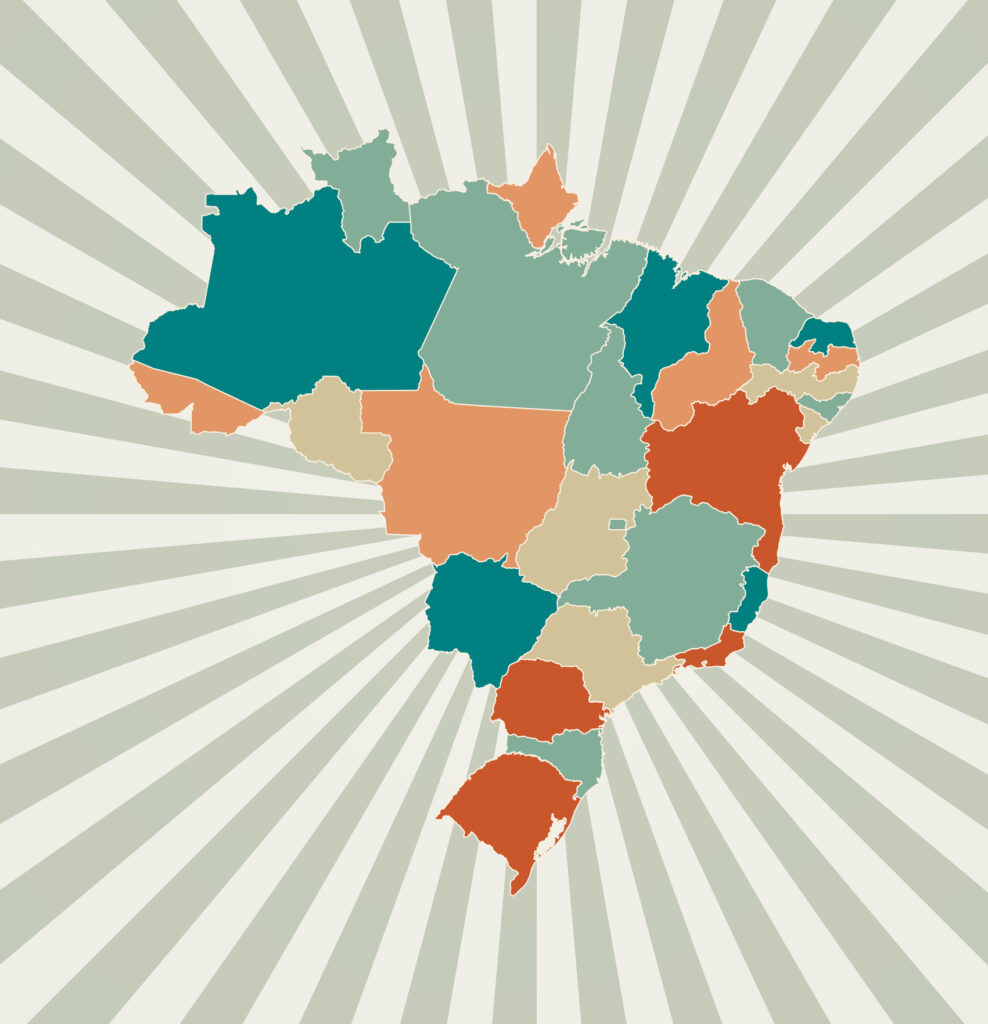
Brazil’s identity is shaped by many cultures. Portuguese colonisation left its mark, but the country’s roots lie equally in its Indigenous peoples and in the millions of Africans forced into slavery. Their influence is present in today’s language, music, religion, food and celebrations.
In fact, if you study Brazilian Portuguese, you’ll notice that many words come from Indigenous languages. According to the Brazilian Institute of Geography and Statistics (IBGE), there are 304 Indigenous communities in Brazil today, together speaking 274 languages
In turn, the legacy of African culture in Brazil appears strongly in music, with samba, maracatu, and axé. It is present in religion, through candomblé and umbanda, which merge African traditions with Christianity, a tradition still deeply rooted in Brazil today. It is also in food: feijoada, vatapá and acarajé, the last two more traditional in the Northeast of Brazil.
Besides these main influences, Brazil also has meaningful roots in Japanese, Italian, Syrian, German, Polish and Ukrainian cultures. The latter two left a stronger mark in the south of Brazil, especially in architecture, food and celebrations such as Oktoberfest. And in the last 20 years, Brazil has become home to Venezuelans, Bolivians and Haitians who came in search of a better life, while also enriching the country with their beliefs and culture.
For brands, this diversity cannot be just background colour; it is central to communication in the country. To be successful, campaigns must reflect the cultural mosaic Brazilians live every day, while recognising the ongoing social debates around inclusion and historical inequality. Successful messaging in Brazil is built on respect, representation and cultural fluency.
Informality, imperfection and poetry sit at the heart of the Brazilian soul. There is joy in feeling, in expressing, in using colour with freedom. You find it in a cold beer shared on a pavement while live music drifts in the background, often samba, not only for the rhythm but for the atmosphere of ease, lightness and conversation it creates.
Daily life also carries a sense of closeness, the kind that comes from greeting the familiar faces you pass each morning, people whose names you may never learn but with whom you still share a quiet bond. Intimacy seeps into the streets and colours the way people relate to one another.
For brands, this means tone holds as much weight as message. Campaigns that lean too heavily into formality risk falling flat, while those that embrace informality, creativity and the nuances of local language tend to feel far more genuine. In Brazil, communication is culture in motion, and success comes from speaking in a way that feels natural and respectful.
Informality, imperfection and poetry sit at the heart of the Brazilian soul. There is joy in feeling, in expressing, in using colour with freedom. You find it in a cold beer shared on a pavement while live music drifts in the background, often samba, not only for the rhythm but for the atmosphere of ease, lightness and conversation it creates.
Daily life also carries a sense of closeness, the kind that comes from greeting the familiar faces you pass each morning, people whose names you may never learn but with whom you still share a quiet bond. Intimacy seeps into the streets and colours the way people relate to one another.
For brands, this means tone holds as much weight as message. Campaigns that lean too heavily into formality risk falling flat, while those that embrace informality, creativity and the nuances of local language tend to feel far more genuine. In Brazil, communication is culture in motion, and success comes from speaking in a way that feels natural and respectful.
Brazil’s media landscape is both diverse and fast-moving. Traditional giants like Globo, Folha de S. Paulo and Estadão remain influential, but it is digital platforms that set the daily agenda. Even the largest outlets have adapted by expanding their presence on Instagram, YouTube, Tik Tok and X.
is the main source of communication in Brazil and the leading platform, used by 96% of internet users. It is present across all age groups and regions, not only for personal chats but also for business, customer service and even government services. Brazil is one of WhatsApp’s largest markets worldwide
counts 144 million users in Brazil, ranking third worldwide. The platform is experiencing a surge in sports content, with channels such as Cazé TV, which broadcasts and narrates events often inaccessible to those without pay TV.
has 135 million users in Brazil, with 70% using the platform for shopping. The country also has more than 500,000 active influencers.
on the other hand, is gaining strong traction, especially among Gen Z and younger millennials, and has already surpassed 90 million users in the country.
has also consolidated its position in Brazil, with over 80 million registered users.
with Brazil ranking among the platform’s top six markets worldwide. It is most popular among adults aged 18 to 34 and serves as an important source of political news. The platform reaches around 10% of the population, with 22.9 million users.
major cities like São Paulo and Rio de Janeiro set trends, while smaller towns rely heavily on WhatsApp and Facebook groups.
For international brands, this complexity can seem daunting but at Sherlock Communications, we help clients navigate Brazil’s fast-changing media ecosystem, ensuring that campaigns cut through, land with cultural nuance and reach audiences where they are most engaged.
In Brazil, the way we communicate is anything but ordinary. Our strategies are often lively, entertaining, and filled with personality. Jingles, humour, memes and informal language are not gimmicks here, they are essential tools for building trust and connection. We love to engage, not just inform. Campaigns that entertain and spark joy perform better than those that stick strictly to facts and figures.
Brazilians are quick to adapt to social media trends and breaking news. If something grabs the media’s attention, you can bet it will appear on social platforms, especially on media outlets’ Instagram pages. Users often add an entertaining twist or meme.
For international brands, success means knowing how to balance creativity with cultural fluency. At Sherlock Communications, we help clients tap into Brazil’s love of spontaneity, designing campaigns that feel authentic, engaging and timed to local dynamics.
In Brazil, the way we communicate is anything but ordinary. Our strategies are often lively, entertaining, and filled with personality. Jingles, humour, memes and informal language are not gimmicks here, they are essential tools for building trust and connection. We love to engage, not just inform. Campaigns that entertain and spark joy perform better than those that stick strictly to facts and figures.
Brazilians are quick to adapt to social media trends and breaking news. If something grabs the media’s attention, you can bet it will appear on social platforms, especially on media outlets’ Instagram pages. Users often add an entertaining twist or meme.
For international brands, success means knowing how to balance creativity with cultural fluency. At Sherlock Communications, we help clients tap into Brazil’s love of spontaneity, designing campaigns that feel authentic, engaging and timed to local dynamics.
Brazilians increasingly want to feel a personal connection with the people they follow, which is why video-driven content has exploded in popularity. Podcasts, video essays and reaction videos are hugely popular, but videocasts go a step further by putting faces to voices and creating a sense of intimacy
We love hearing personal stories, discovering the details that make others tick. It’s not just about what people do, it’s about the little things that make us feel connected. So much so that top brands in Brazil have jumped on the trend, launching their own podcasts with journalists, former TV hosts, and social media influencers, such as Universa, Bonita de pele, Jornal O Globo, and GNT.
In the first five months of 2024 alone, Brazilians watched 2.9 billion minutes of videocasts, a 58% increase from the previous year. Generation Z, in particular, is leading the way, with 37% of young adults tuning in to live or recorded videocasts.
It makes sense that YouTube is the main platform for discovering podcasts in Brazil, with 81% of weekly podcast listeners using the platform to find new shows. Many TV channels also have YouTube accounts, where they create editorial content featuring shorter shows and interviews hosted by the most extroverted and authentic personalities.
For international organisations, videocasts represent a unique chance to humanise their brand and connect directly with Brazilian audiences. At Sherlock Communications, we help clients enter this fast-growing space strategically, crafting content that feels local, authentic and aligned with Brazil’s digital culture.
Brazilians increasingly want to feel a personal connection with the people they follow, which is why video-driven content has exploded in popularity. Podcasts, video essays and reaction videos are hugely popular, but videocasts go a step further by putting faces to voices and creating a sense of intimacy
We love hearing personal stories, discovering the details that make others tick. It’s not just about what people do, it’s about the little things that make us feel connected. So much so that top brands in Brazil have jumped on the trend, launching their own podcasts with journalists, former TV hosts, and social media influencers, such as Universa, Bonita de pele, Jornal O Globo, and GNT.
In the first five months of 2024 alone, Brazilians watched 2.9 billion minutes of videocasts, a 58% increase from the previous year. Generation Z, in particular, is leading the way, with 37% of young adults tuning in to live or recorded videocasts.
It makes sense that YouTube is the main platform for discovering podcasts in Brazil, with 81% of weekly podcast listeners using the platform to find new shows. Many TV channels also have YouTube accounts, where they create editorial content featuring shorter shows and interviews hosted by the most extroverted and authentic personalities.
For international organisations, videocasts represent a unique chance to humanise their brand and connect directly with Brazilian audiences. At Sherlock Communications, we help clients enter this fast-growing space strategically, crafting content that feels local, authentic and aligned with Brazil’s digital culture.
Brazilians are deeply nostalgic, often reminiscing about the past, particularly when it comes to entertainment. This is one reason why telenovelas remain incredibly popular, even gaining more traction among millennials and zoomers who grew up watching them with their parents.
Streaming has amplified this trend. f. Globoplay, Globo’s streaming service, offers both new productions and a dedicated section for classic telenovelas – and approximately 173 million Brazilians watched at least one episode of a novela in 2024 (both on TV and streaming platforms). Give Beleza Fatal and Vale Tudo a try – we bet you won’t be able to stop binge-watching!
Nostalgia has also been reignited by milestones like Fernanda Torres’ Oscar winning for Ainda Estou Aqui, which reminded audiences of the emotional and cultural significance of these stories.
For brands, this nostalgia represents more than entertainment value: it’s a powerful cultural connector. Campaigns that tap into collective memories — whether through references, music, or shared family experiences — can spark instant recognition and trust with Brazilian audiences.
Brazilians are deeply nostalgic, often reminiscing about the past, particularly when it comes to entertainment. This is one reason why telenovelas remain incredibly popular, even gaining more traction among millennials and zoomers who grew up watching them with their parents.
Streaming has amplified this trend. f. Globoplay, Globo’s streaming service, offers both new productions and a dedicated section for classic telenovelas – and approximately 173 million Brazilians watched at least one episode of a novela in 2024 (both on TV and streaming platforms). Give Beleza Fatal and Vale Tudo a try – we bet you won’t be able to stop binge-watching!
Nostalgia has also been reignited by milestones like Fernanda Torres’ Oscar winning for Ainda Estou Aqui, which reminded audiences of the emotional and cultural significance of these stories.
For brands, this nostalgia represents more than entertainment value: it’s a powerful cultural connector. Campaigns that tap into collective memories — whether through references, music, or shared family experiences — can spark instant recognition and trust with Brazilian audiences.
Brazil is one of the world’s largest gaming markets, home to a vibrant and passionate community. Twitch alone has 16.9 million Brazilian users, making the country the platform’s second-largest market. The audience is young and highly engaged, with 81 per cent aged 18 to 24.
Twitch has become a central meeting point for this community, offering live streams, esports tournaments and real-time interaction with creators. This close-knit environment gives viewers a sense of belonging as they share moments, reactions and emotions with fellow fans. For brands, the opportunity is significant. Gaming audiences are loyal, participatory and culturally influential.
Gastronomy is important in both cultural and economic terms. In 2010, UNESCO recognised Mexican cuisine as Intangible Cultural Heritage of Humanity, a designation that continues to shape national pride and identity.
Gastronomy also drives economic activity: Mexico’s Ministry of Tourism estimates that food generates 245.46 billion pesos annually, representing 30% of tourism consumption.Brazil is one of the world’s largest gaming markets, home to a vibrant and passionate community. Twitch alone has 16.9 million Brazilian users, making the country the platform’s second-largest market. The audience is young and highly engaged, with 81 per cent aged 18 to 24.
Twitch has become a central meeting point for this community, offering live streams, esports tournaments and real-time interaction with creators. This close-knit environment gives viewers a sense of belonging as they share moments, reactions and emotions with fellow fans. For brands, the opportunity is significant. Gaming audiences are loyal, participatory and culturally influential.
In Brazil, valuable campaigns are those that feel authentic, inclusive and culturally connected. People want to see themselves represented, and brands that manage to capture this spirit stand out. That’s why integrated campaigns in Brazil typically blend emotional storytelling, cultural references and interactive formats like video, music and social media.
Certain creative approaches consistently resonate:
In Brazil, valuable campaigns are those that feel authentic, inclusive and culturally connected. People want to see themselves represented, and brands that manage to capture this spirit stand out. That’s why integrated campaigns in Brazil typically blend emotional storytelling, cultural references and interactive formats like video, music and social media.
Certain creative approaches consistently resonate:
Light, informal storytelling often creates strong emotional bonds.
Using a famous song or a catchy jingle helps campaigns stay top of mind.
Drawing from TV shows, football, soap operas, or popular festivities makes the message more relatable.
Communication that feels approachable and authentic resonates better.
Brazilians also value brands that address social causes such as diversity, sustainability, and inclusion, showing they care about more than just selling products.
At key moments like Carnival, Christmas or Mother’s Day, campaigns that link to music, family and shared experiences generate especially strong impact. At Sherlock Communications, we help international clients translate these cultural insights into creative strategies that engage audiences authentically while delivering measurable results.
Across industries, the most successful campaigns in Brazil share a common thread: they are genuine, culturally rooted and emotionally engaging.
Beverages (Beer & Soft Drinks): Skol and Brahma often use humor and Carnival imagery in TV ads. Coca-Cola adapts its global “Holidays Are Coming” narrative to focus on Brazilian family lunches, samba music, and togetherness.
Fast Food: McDonald’s embraces local slang and humor, launching campaigns like “Méqui 1000” in São Paulo. Burger King uses bold humor and irreverent tone on social media, which resonates strongly with younger audiences.
Technology & Telecom: Claro and Vivo highlight football sponsorships and use celebrities in humorous, everyday situations. Apple has localized iPhone ads by focusing on Brazilian creativity, Carnival photography, and urban lifestyle.
Entertainment & Streaming: Netflix Brazil dominates by leveraging memes, soap opera references, and Brazilian celebrities in their social media. Globoplay campaigns also tie into national passion for telenovelas and football.
Retail & E-commerce: Magazine Luiza (Magalu) created a virtual influencer, “Lu do Magalu,” blending humor, cultural references, and tech innovation to become one of the most followed brand figures in Brazil.
Brands with social impact: Natura highlights sustainability and inclusion in its campaigns, while Ambev invests in recycling projects and community initiatives. These actions build trust and long-term loyalty, since Brazilians appreciate brands that stand for positive change.
At the heart of all these approaches is a warmth and openness that defines Brazilian communication. Brazilians respond best to brands that are not only creative but also true to themselves: genuine, spontaneous and connected to people’s everyday lives.
Across industries, the most successful campaigns in Brazil share a common thread: they are genuine, culturally rooted and emotionally engaging.
Beverages (Beer & Soft Drinks): Skol and Brahma often use humor and Carnival imagery in TV ads. Coca-Cola adapts its global “Holidays Are Coming” narrative to focus on Brazilian family lunches, samba music, and togetherness.
Fast Food: McDonald’s embraces local slang and humor, launching campaigns like “Méqui 1000” in São Paulo. Burger King uses bold humor and irreverent tone on social media, which resonates strongly with younger audiences.
Technology & Telecom: Claro and Vivo highlight football sponsorships and use celebrities in humorous, everyday situations. Apple has localized iPhone ads by focusing on Brazilian creativity, Carnival photography, and urban lifestyle.
Entertainment & Streaming: Netflix Brazil dominates by leveraging memes, soap opera references, and Brazilian celebrities in their social media. Globoplay campaigns also tie into national passion for telenovelas and football.
Retail & E-commerce: Magazine Luiza (Magalu) created a virtual influencer, “Lu do Magalu,” blending humor, cultural references, and tech innovation to become one of the most followed brand figures in Brazil.
Brands with social impact: Natura highlights sustainability and inclusion in its campaigns, while Ambev invests in recycling projects and community initiatives. These actions build trust and long-term loyalty, since Brazilians appreciate brands that stand for positive change.
At the heart of all these approaches is a warmth and openness that defines Brazilian communication. Brazilians respond best to brands that are not only creative but also true to themselves: genuine, spontaneous and connected to people’s everyday lives.
Brazil is a vast, complex country, and what works in São Paulo might not resonate in Recife or Porto Alegre. Humour, communication styles, daily routines, cuisine, favourite brands and openness to new experiences vary dramatically from one region to another.
According to Sherlock Communications’ Bad Language Report 2024, 73% of Brazilians prefer campaigns that reflect their region’s identity; proof that nuance makes the difference between campaigns that connect and those that miss the mark.
That’s why local expertise is essential. Success in Brazil means understanding not just the customer, but the entire ecosystem: cultural habits, politics, media dynamics and fast-changing digital trends. At Sherlock, our bilingual consultants are embedded across Brazil’s regions and work seamlessly with international teams, ensuring that global strategies are adapted with the right cultural intelligence to deliver measurable results.
Brazil’s scale and diversity mean that certain industries play an outsized role in shaping both the economy and consumer culture. For international brands, these sectors present huge opportunities, but also demand tailored communications to earn trust and relevance.
Brazil’s scale and diversity mean that certain industries play an outsized role in shaping both the economy and consumer culture. For international brands, these sectors present huge opportunities, but also demand tailored communications to earn trust and relevance.
Brazil is the region’s fintech leader, home to a booming digital payments ecosystem and an innovation-hungry consumer base.
As one of Brazil’s largest economic drivers, agribusiness is central to both exports and domestic consumption, with sustainability increasingly under the spotlight.
Strong investments in EVs and clean mobility are reshaping a sector that has long been part of Brazil’s industrial identity.
With global leadership in biofuels and a growing renewables market, brands in this space have the chance to position themselves as partners in Brazil’s energy transition.
From football to gaming and music, cultural passion points dominate public life and provide powerful platforms for brand engagement.
Brazil is one of Latin America’s fastest-growing crypto markets, with millions already using digital wallets. Regulatory progress is creating a safer environment for investors, opening the door for brands to position themselves as innovators while building credibility and trust.
At Sherlock Communications, we’ve worked across all these sectors, helping international clients navigate regulation, connect with communities and tell stories that resonate in Brazil’s fast-evolving market.
At Sherlock Communications, we design insight-driven, integrated strategies that reach Brazilians where they really are; from traditional media and television to WhatsApp, Instagram, podcasts and emerging platforms.
We don’t just know which outlets people follow; we understand how Brazilians consume content, make decisions and build trust. That means pairing media relations with social engagement, influencer partnerships and tailored storytelling that reflects local culture.
Our 360° approach ensures that every campaign speaks in the right tone, on the right platform, to the right audience; turning international objectives into communications that resonate authentically in Brazil and deliver measurable results.