
At Sherlock Communications, we empower international organisations to land, engage, and flourish within the Uruguayan market. Our local experts seamlessly marry cultural nuance and trusted media ties with world-class strategic creativity. Operating exclusively for international clients, we act as the essential conduit between your global vision and Uruguay’s vibrant, digitally-rich communications landscape
With nearly the entire population of 3.3 million settled in cities, Uruguay is a remarkably cohesive market. The focus is firmly on Montevideo, where the density of people and digital connectivity shapes how culture and information are consumed. It’s a small, urbanised environment where a well-placed strategy can have an outsized impact.
Uruguay has traditionally been defined by its land, with beef, soy, and dairy serving as the economy’s backbone. These remain essential, but the country has quietly changed. Over the last few decades, it has branched out into high-tech sectors like software development and digital services, while also becoming a regional frontrunner in wind and solar energy.
Tourism is another major player, with the Atlantic coast and Montevideo drawing in steady foreign income and providing a lot of local jobs. This combination of old-school stability and modern infrastructure makes Uruguay a great place for international brands to operate. However, while the digital setup is world-class, the market is small and personal. Success here really comes down to navigating the local customs and building genuine trust.


According to Mexico’s Ministry of Economy, FDI reached a recordUS$34.27 billion in the first half of 2025, up 10.2% year-on-year, with new investments growing 3.4 times compared to 2024. The UNCTAD 2024 ranking placed Mexico 11th globally for foreign investment inflows, underscoring its strategic role as an entry point for businesses into Latin America.
The USMCA agreement has also delivered significant results: trade among Mexico, the US and Canada has increased sixfold, generating millions of jobs across the three countries. For international organisations, this integration, alongside Mexico’s strong manufacturing and logistics sectors, makes the country not just attractive, but often essential to a regional strategy. But success here requires more than optimism. Regulatory complexity, inequality and regional differences mean that brands need genuinely local insight and on the ground support to navigate the market effectively.

Uruguayan identity is a bit of a melting pot, mixing indigenous roots and Afro-descendant heritage with a long history of European migration. It’s a place where community actually means something. People still rely heavily on their neighbourhood networks and local opinion leaders, whether they’re meeting at a street market or a festival. These local connections are what really decide which voices are trusted and which messages get ignored.
For any brand, getting the tone right is everything. A campaign that works in Montevideo might feel out of place in the interior provinces, where local broadcasters and personal relationships still carry the most weight. You have to match the country’s specific rhythm to be taken seriously.
It’s an interesting contradiction: Uruguay is one of the most digitally connected spots in Latin America, with almost everyone online, yet traditional media hasn’t lost its grip. To really reach people, you have to navigate both the digital world and the old-school channels that still sit at the heart of daily life.

Mexico’s consumers are increasingly shaped by a mix of technology, value-consciousness and local pride.
A 2025 Ernst & Young study shows that 75% of Mexicans expect brands to invest in innovation, while nearly half (47%) already see AI as more effective than human support. For international companies, this underlines the need for campaigns that combine creativity with technological relevance.
Digital adoption is central to this picture. According to Statista, 88% of Mexican adults own a smartphone, and 73% of online purchases are made via mobile devices. More than half (52%) of the population made at least one online purchase in the past year.
With 71% of consumers reporting they have bought a product influenced by social media ads (particularly on Facebook, Instagram and TikTok) mobile-first, social-first strategies are essential to success.
At the same time, consumer confidence is strong, with INEGI reporting a 46.7-point increase in 2025 in its Consumer Confidence Index. For international organisations, this presents a unique opportunity: with trust levels rising, brands that can demonstrate cultural relevance and deliver genuine value will be best positioned to grow.
Television still has a massive influence here, particularly for anyone over 35. Canal 10 usually comes out on top, with Canal 12 and the public broadcaster Canal 5 following closely behind. Radio is another daily essential that you’ll find playing in almost every household. While podcasts are certainly growing in popularity, stations like Radio Monte Carlo, Sarandí, and El Espectador are still the main voices people wake up to.
For news, traditional names like El País and El Observador still carry a lot of weight through their websites. However, Uruguayans are naturally quite sceptical and tend to verify what they hear across several different places before they believe it.
There is also a very clear divide between generations. Younger people under 34 have largely moved away from the old ways, preferring streaming and social media. Because older adults still stick to the traditional channels, you really have to balance both worlds if you want to get your message across to the whole country.


According to INEGI, 96.5% of Mexicans live in family households, with an average of four people per home. In many traditional families, women still play the leading role in purchasing decisions, while younger households tend to share responsibilities more equally. Across both, family gatherings and social events remain important consumption moments.
Social media plays a central role in Uruguay, with 76% of the population actively using digital platforms. However, engagement habits differ significantly by age group, affecting how brands should tailor their message and channel mix.
Gastronomy is important in both cultural and economic terms. In 2010, UNESCO recognised Mexican cuisine as Intangible Cultural Heritage of Humanity, a designation that continues to shape national pride and identity.
Gastronomy also drives economic activity: Mexico’s Ministry of Tourism estimates that food generates 245.46 billion pesos annually, representing 30% of tourism consumption.
For brands, these distinctions highlight the importance of age-specific, region-sensitive communication strategies, combining digital agility for younger audiences with trusted traditional channels for older demographics.

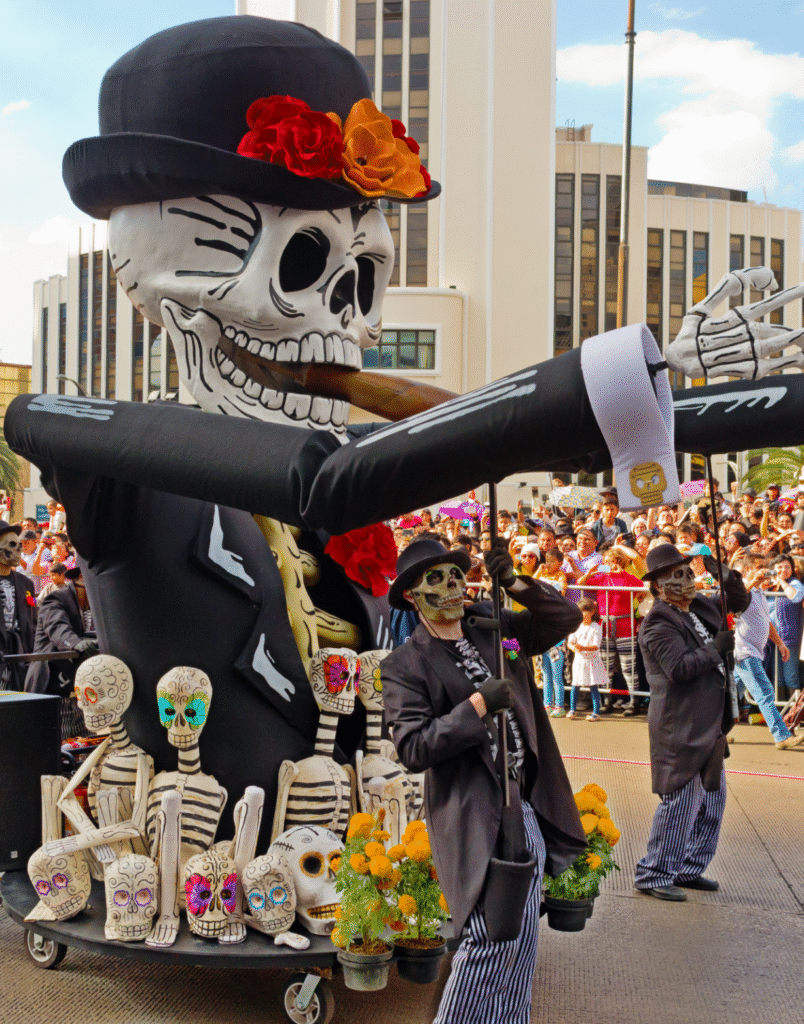
Festivities are a major trigger for spending. National holidays and celebrations such as Independence Day, Day of the Dead and Christmas posadas regularly spark peaks in household consumption.
Some studies suggest food and beverage spending can rise by as much as 40–50% during Independence Day celebrations, while research into middle-income urban households indicates that annual spending on celebrations can represent a significant share of household budgets.
For international brands, these numbers reinforce a key message: campaigns that embrace cultural identity, traditions and everyday family life are far more likely to resonate with Mexican consumers than those that simply replicate global playbooks.
Designing an effective communication strategy in Uruguay requires understanding nuances that are invisible from the outside. Local expertise makes it possible to navigate cultural expectations, regional identities and the rhythms of national events such as departmental fairs, festivals and business expos.
It also means recognising the influence of local opinion leaders, trade chambers, municipal networks and community broadcasters; all of which play a major role in shaping public perception. A team embedded in Uruguay can anticipate timing, tone and context, ensuring messaging feels authentic and lands with impact.

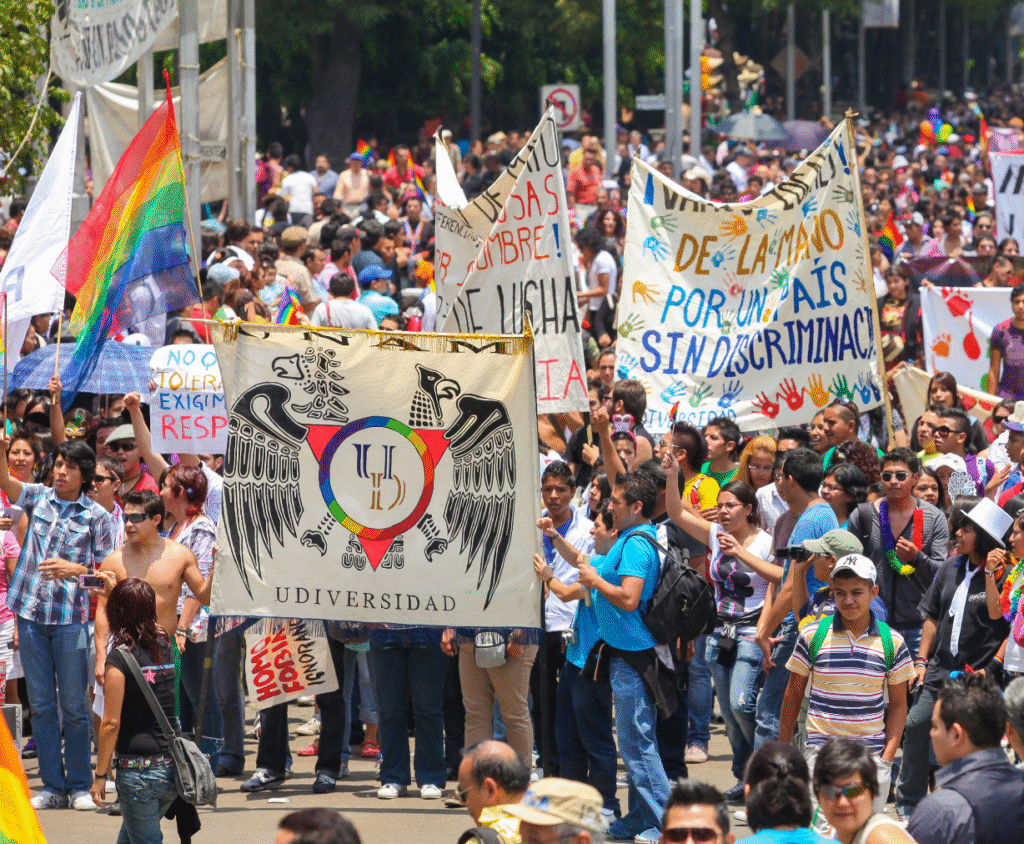
Like much of Latin America, Mexico’s media still has blind spots in representing diversity, from the LGBTQIAP+ community to women, people with disabilities and indigenous peoples.
For brands entering the market, this lack of representation creates both a challenge and an opportunity: campaigns that engage authentically with diverse communities stand out and resonate more deeply.
Our work in Uruguay combines traditional influence with digital precision. We manage the full spectrum of Media Relations, building the trusted connections across TV, radio, and digital outlets that give your brand an authentic voice. This is supported by a sharp Digital Strategy, using SEO and data-led Social Media campaigns tailored specifically to local behaviours.
Beyond visibility, we help brands ground themselves in Uruguayan values through CSR and Community Engagement, ensuring every project is backed by deep Market Research. We are also committed to the community we work in, providing pro bono expertise to organisations focused on diversity and inclusion. For us, it is about balancing commercial success with a positive social impact.