
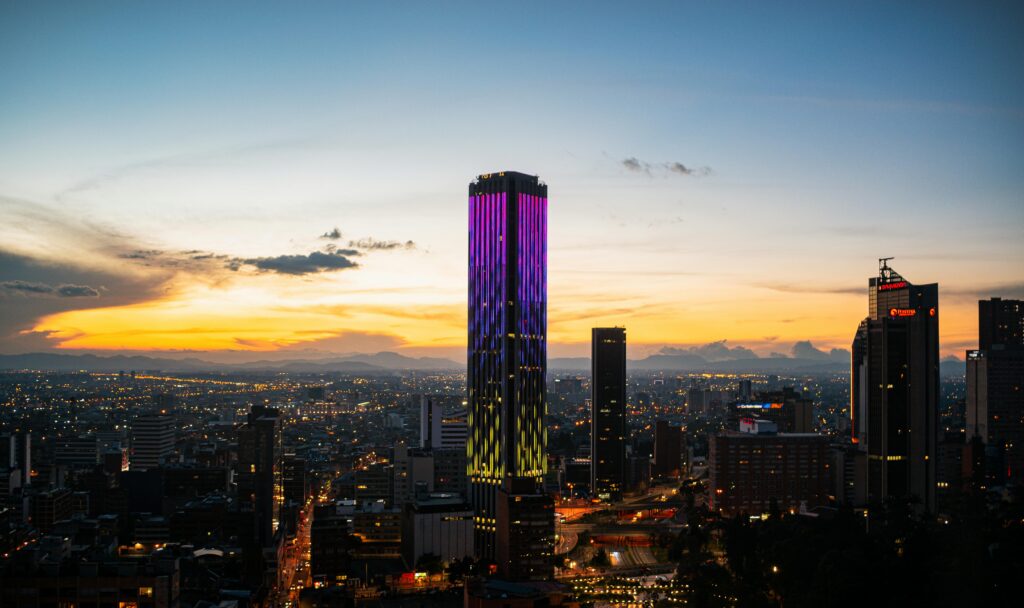
Colombia 2026 is shaping up to be a turning point. Beyond being an election year, it is a decisive period in which political, economic, social, and cultural transformations converge—transformations that could redefine the country’s direction in the medium and long term. Within a regional and international context marked by uncertainty, Colombia faces structural challenges, but also significant opportunities to strengthen its institutions, energize its economy, and consolidate its role as a key player in Latin America’s development.
The Defining Moment: Colombia’s Presidential Elections 2026
Without a doubt, Colombia’s elections will be the most significant event of 2026. This process will define the country’s political leadership and the direction of its main public policies over the next four years. The electoral campaign will be shaped by debates on security, economic growth, employment, state reform, and social cohesion.
Beyond polarization, the Colombian presidential elections of 2026 represent an opportunity to strengthen democracy, promote greater citizen participation, and raise the quality of public debate. Citizens’ demands for clear, viable, and sustainable proposals can contribute to a more technical and responsible agenda, aligned with the country’s real needs.
The Colombian Economy: Between Challenges and Recovery
Colombia’s economic outlook for 2026 will continue to face significant challenges, including moderate growth, fiscal pressures, residual inflation, and a volatile international environment. However, signs of adjustment and learning are also emerging. Debates around the minimum wage, the sustainability of public spending, and business competitiveness will be at the center of the agenda.
This scenario makes it necessary to accelerate structural reforms that boost productivity, strengthen formal employment, and promote investment.
According to Holland & Knight, sectors such as infrastructure, energy, and technology have gained momentum to become engines of growth. If stable public policies are aligned with private-sector initiatives, these sectors could drive GDP growth during the year.
Security and State Presence
Security will remain a priority issue for Colombia 2026, not only from a social perspective but also as a determining factor for investor confidence and regional economic development. Pockets of violence persist in specific regions, especially in border and rural areas where illegal economies and territorial disputes converge. These conditions generate operational uncertainty, increase logistical costs, and limit private investment, particularly in sectors such as infrastructure, energy, agribusiness, and tourism.
Security and an effective state presence are enabling conditions for economic activity. Territorial stability, asset protection, legal certainty, and operational continuity directly influence country-risk perception and national and foreign investment decisions.
In this sense, strengthening institutional presence, improving coordination among authorities, and promoting safe environments for business operations not only help reduce violence but also create a virtuous circle of trust, investment, and employment. The consolidation of legal economies, the development of social infrastructure, and collaboration with the private sector can become key tools for advancing toward sustainable and economically productive security.
Colombia on the International Stage
Colombia 2026 will continue adjusting its position within the global geopolitical context. Relations with the United States, regional cooperation, and participation in multilateral forums will be decisive in attracting investment, strengthening security, and positioning the country as a reliable actor.
In addition, the energy transition, the climate agenda, and the green economy will open opportunities for Colombia to stand out as a strategic country in biodiversity, renewable energy, and sustainable development. This approach not only responds to global trends but can also generate employment, innovation, and regional development.
Social and Cultural Transformations

Beyond politics and the economy, 2026 will also be a significant year in social and cultural terms. Colombia’s 2026 participation in international sporting events, such as the FIFA World Cup, along with the consolidation of cultural and music festivals in major cities, will continue to strengthen national identity and social cohesion.
Likewise, new generations—increasingly connected and socially aware—will play a leading role in public discourse. Issues such as equity, sustainability, inclusion, and transparency will continue gaining ground, influencing both consumer decisions and expectations of the state and businesses.
One key element that will mark Colombia 2026 is the FIFA World Cup, a global sporting event that traditionally boosts consumption and stimulates multiple sectors of the economy. Although the tournament will be held outside the country, its impact in Colombia will be significant: increased consumption of food and beverages, growth in advertising and brand activations, larger media audiences, and an upturn in sectors such as commerce, entertainment, and domestic tourism.
The World Cup thus becomes a catalyst for the emotional economy, capable of mobilizing audiences, strengthening commerce, and generating opportunities for brands and companies that manage to connect with collective sentiment. Issues such as equity, sustainability, inclusion, and transparency will continue to gain prominence, influencing both consumer choices and expectations of the state and businesses.
Digitalization and Innovation as Drivers of Change
Digital transformation will be another major cross-cutting development for Colombia 2026. Advances in artificial intelligence, automation, and digital services will continue to reshape the way people work, produce, and communicate. For Colombia, this process represents a challenge in terms of workforce training and adaptation, but also an opportunity to close gaps and increase competitiveness.
Technology adoption, strengthening the entrepreneurial ecosystem, and investment in digital education can position the country as a regional innovation hub, especially in sectors such as fintech, govtech, cybersecurity, and the creative economy.
Colombia 2026 will reach a critical moment. The events that shape the year—elections, economic debates, security challenges, and social transformations—should not be seen solely as sources of uncertainty, but as opportunities for progress.
If the country succeeds in channeling political debate toward constructive proposals, strengthening institutional trust and, consequently, investor confidence, and committing to a more productive, sustainable, and innovative economy, 2026 could become the starting point of a new phase of growth and stability. The combination of human talent, cultural diversity, natural wealth, and adaptability provides a solid foundation for building a more competitive and inclusive future.