
In an era where digital presence is increasingly important, understanding how paid traffic works is essential to boosting your business’s success. More than just a digital marketing strategy, paid traffic, when executed correctly, has the power to ensure that your message reaches the right people at the right time.
In this article, we will explain how paid traffic works, uncovering its main features and benefits. We will also detail why it is essential for your digital marketing strategy, helping you achieve consistent and fast results.
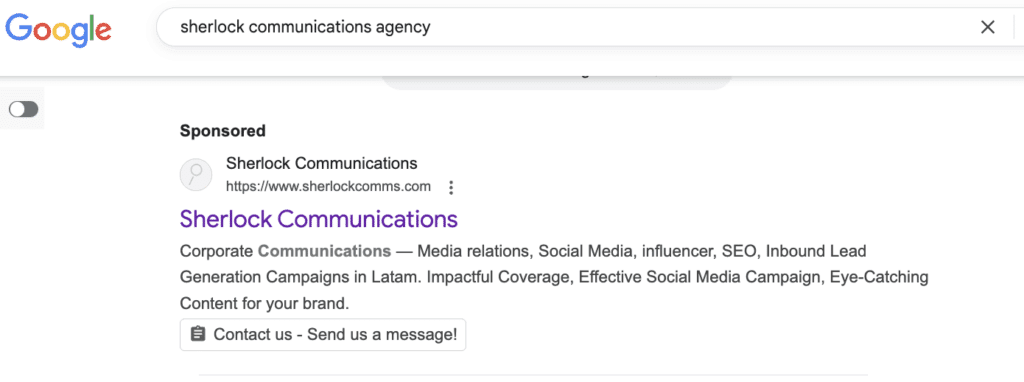
At Sherlock Communications, we specialize in creating search ads, which generate real conversions and help grow your business in an efficient and strategic way.
What is Paid Traffic?
Simply put, paid traffic is a strategy where you pay to drive visitors to your social media, website, e-commerce, or blog. In other words, you invest money in advertising platforms to increase your business’s visibility, and consequently attract more visitors.
Like many other areas of digital marketing, paid traffic depends on your budget. In this context, it’s important to understand what cost-per-click (CPC) and cost-per-thousand impressions (CPM) are.
Cost-Per-Click (CPC)
CPC refers to the amount you pay each time a user clicks on your ad. This metric is essential for campaigns aimed at driving traffic to a website or landing page. With CPC, you only pay when someone clicks on your ad.
For example, if your ad’s CPC is $1.00, you will pay that amount each time someone clicks on your ad. CPC is effective for generating direct and measurable results, as it is directly linked to the user’s action. It allows you to control the cost of acquiring visitors to your site, making it more suitable for conversion-focused strategies.
Cost-Per-Thousand Impressions (CPM)
On the other hand, CPM is the cost you pay for a thousand impressions of your ad, regardless of whether someone clicks on it. This model is typically used for campaigns focused on increasing brand visibility, without expecting an immediate action from the user, such as a click.
If your campaign’s CPM is $20.00, this means that you will pay $20.00 each time your ad is shown a thousand times, regardless of whether anyone clicks it. This payment model is effective when the focus is on increasing your brand’s exposure and digital presence.
Key Paid Traffic Platforms
Currently, there are several platforms offering effective solutions for paid traffic, but the main options are:
- Google Ads: Google Ads continues to be one of the most powerful platforms for generating paid traffic. It allows your ads to appear in the top search results on Google, as well as run video campaigns on YouTube and display banners on partner websites in the Display Network. Ideal for businesses looking to reach customers when they are actively searching for specific products or services.
- Meta Ads (Facebook and Instagram): Meta Ads encompasses the advertising platforms for Facebook and Instagram, offering a wide range of ad formats, such as carousel ads, stories, and feed posts. With an active user base and advanced targeting tools, it is ideal for branding campaigns and visual engagement.
- TikTok Ads: TikTok Ads has emerged as an effective platform for paid traffic, especially for reaching younger audiences with short, creative videos. With a highly engaged user base, it offers opportunities for viral campaigns and authentic content.
- LinkedIn Ads: LinkedIn Ads is the most suitable advertising platform for B2B companies, allowing you to target professionals based on job title, industry, and other specific criteria. It’s perfect for campaigns aimed at reaching decision-makers in niche markets.
Why Paid Traffic Is Essential for Your Strategy
Now that you understand how paid traffic works, it’s important to emphasize that there is no magic formula or miracle. The user attracted by your ad will not stay on your page or social media and convert into a qualified lead if you don’t have relevant and attractive content.
In this sense, it’s crucial to understand that, in most cases, paid traffic is one of the most effective strategies in digital marketing, but it shouldn’t be the only one.
Unlike organic traffic, which is built over time through research and much technique, paid traffic is ideal for those looking for more immediate results. With Google Ads, for example, you can place your website on the first page of results, naturally making it more visible to potential customers.
Precise segmentation and fast results
If your goal is to increase sales, it’s essential to communicate with the right audience. And this is where paid traffic comes in: it offers highly accurate targeting capabilities.
On the major paid media platforms mentioned above, you have full control over who will see your ads. You can set parameters such as gender, age, location, interests, shopping habits, and even professional titles. This filter ensures that your campaign reaches exactly who you want.
For example, if you’re aiming to increase brand awareness, you can create an effective brand awareness campaign, focused on showcasing your product to a broad audience, generating brand recognition without expecting an immediate action like a purchase.
That’s why it’s essential to understand that simply investing money won’t guarantee results. A carefully planned campaign is needed, with a precise definition of the target audience, the creation of effective ads, optimization of landing pages to receive visitors, and the application of best practices at every step.
When executed properly, paid traffic can become your best ally.
How Sherlock Communications Can Help
At Sherlock Communications, we have a team of specialists in paid traffic. Our expert team will work closely with yours to develop a solid strategy aligned with your company’s marketing goals, establishing a detailed schedule and action plan. We offer a wide range of services, including:
- Keyword research: Identifying the most relevant and profitable keywords for your business to target in campaigns.
- Ad creation: Developing engaging ads aligned with user searches, encouraging clicks.
- Campaign setup: Implementing PPC campaigns, with strategic targeting, bid adjustments, and ad scheduling.
- Landing page optimization: Improving landing pages to increase conversions and provide a better user experience.
- Performance monitoring and optimization: Continuously tracking campaign performance, making necessary adjustments to maximize effectiveness and return on investment (ROI).
In addition, we can help you implement influencer marketing strategies that complement your paid traffic campaigns, increasing your reach and effectiveness through endorsements from influential figures on social media.
These are just a few examples of how our team can help your company generate more qualified traffic, strengthen brand recognition, and achieve excellent results based on your business’s current needs.