
In few countries in the world, politics and economics seem to exist in such different dimensions as in Peru. In just ten years, the country has seen eight presidents come and go, from Ollanta Humala to José Jerí, countless cabinets, and a succession of crises that would have paralyzed any nation. However, the macroeconomic figures tell a different story: the Peruvian economy, with its ups and downs, remains one of the most stable in the region, retaining solid fundamentals, a healthy financial system, the most appreciated currency in Latin America, and a private sector that continues to invest, export, and generate employment, even amid political turmoil.
The most recent “earthquake,” the vacancy of Dina Boluarte
In a context where the population’s main demand revolved around public safety in the face of growing extortion and organized crime in the country, an attack on the singers of Agua Marina, one of the country’s most important musical groups, was the last straw in the same week that transport workers went on strike over the more than 80 murders of drivers this year.
On Thursday, October 9, 2025, Congress—which had previously refused to do so on seven occasions—voted to remove Dina Boluarte from office. She left with a 97% disapproval rating, due to her “permanent moral incapacity” to deal with the wave of crime sweeping the country. Replacing her is José Jerí, president of Congress, who has been questioned for a rape allegation that was dismissed less than two months ago and for requesting illegal payments while chairing the Budget Committee.
Jerí will lead the country six months before the general elections and bring to a close a cycle of political attrition that has characterized Peru over the last decade: short-lived governments, fragmented congresses, and a citizenry filled with uncertainty.
Presidents fall, but not the economy
The turning point in this cycle came in 2016, when the election of Pedro Pablo Kuczynski (PPK) promised economic stability and a return to sustained growth. However, clashes with a Congress dominated by Fujimorism and allegations of corruption led to his resignation in 2018.
From then on, the country entered an unprecedented political spiral: Martín Vizcarra, Manuel Merino, Francisco Sagasti, Pedro Castillo, and Dina Boluarte successively held power, each facing their own context of institutional crisis. Impeachments, vacancies, fiscal investigations, and protests became part of the national political routine.
However, despite the political chaos, the state did not collapse and the economy did not plummet. The Central Reserve Bank (BCRP) maintained its autonomy with Julio Velarde at the helm—he has been in that position for almost two decades—the Ministry of Economy and Finance (MEF) maintained fiscal discipline, and business leaders continued to operate with a mixture of pragmatism and skepticism that is now part of Peru’s economic DNA.
In numbers, the Peruvian paradox holds true: between 2015 and 2025, average real GDP growth is around 2.5% per year, temporarily affected by the pandemic but then resuming its recovery path, reaching 3.3% in 2024. The BCRP maintained one of the lowest inflation rates in the region—closing 2024 at 2%—and the Peruvian sol has been one of the most stable currencies against the dollar in Latin America.
The fiscal deficit, which was also pressured by increased social spending and stimulus measures during the pandemic, has remained at around 3% of GDP, while public debt is below 35%. The mining, agro-export, and financial sectors have been the pillars that have sustained this stability. Mining, despite recurring protests, continues to account for more than 60% of national exports; agriculture, driven by international demand for grapes, blueberries, and avocados, has made Peru a global player; and the financial system maintains one of the lowest default rates on the continent.
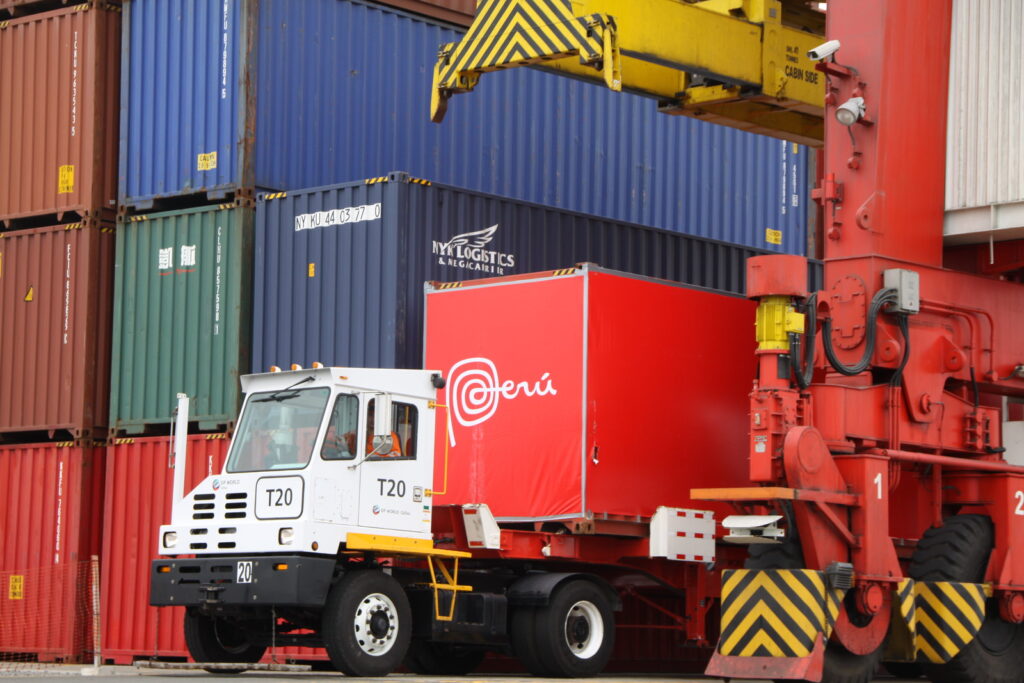
Exports were boosted by megaprojects such as the Port of Chancay. Since it began partial operations, between January and May 2025 alone, US$286 million in exports passed through this terminal, mainly avocados to destinations such as Europe, China, and the United States. In addition, the port is expected to reduce logistics costs by up to 20% for exporters shipping goods to Asia, thanks to more direct routes that avoid delays and transshipments. Another mega-investment that has put Peru in the global spotlight is the new Jorge Chávez International Airport.
The technology sector is also worth mentioning. Following the lockdown and social distancing regulations imposed during the pandemic, the technology market experienced a significant upturn. This led to e-commerce growing by 30% in 2023, placing technological items in eighth place among the products most purchased by Peruvians. Companies also embarked on a process of digitalization, as evidenced by the fact that more than 94% of small and medium-sized enterprises (SMEs) in Peru invested in technology, including video call software.
Business pragmatism as the driving force behind macroeconomic autopilot
The Peruvian private sector has also learned to navigate amid uncertainty. Large companies have adopted a “political risk management” approach that prioritizes operational efficiency and diversification over dependence on public policy.
In recent years, mining investments in projects such as Quellaveco, Antapaccay, and Las Bambas have moved forward, while foreign capital continues to view Peru as a reliable destination in terms of macro stability. Small and medium-sized companies, meanwhile, have found opportunities in digitization, e-commerce, and new fintech ecosystems, sectors that have grown strongly since the pandemic.
The TMF Group’s Global Business Complexity Index shows ups and downs, but sustained progress year after year. In 2025, Peru ranked 13th, representing an improvement compared to 2023 and 2024, when the country ranked 7th and 9th respectively, and a huge leap forward compared to 2022, when Peru was considered the third most complicated country in the world. All this without collapsing even in the most turbulent times, such as Castillo’s vacancy or the protests of 2023. The logic is simple: as long as the macro rules remain in place, businesses can adapt to political noise.
The other side: protests, inequality, and insecurity
However, this apparent economic immunity should not obscure the social effects of the political crisis. Constant clashes between the executive branch and Congress, a lack of continuity in public policies, and social conflicts in mining regions have slowed progress in closing gaps.
The year 2023 left 50 dead in protests against the Boluarte government and a sense of deep disconnect between Lima and the Andean regions. While GDP is growing, citizens’ perception of well-being is not keeping pace: informal employment remains above 70%, and more than 25% of the population remains in poverty or vulnerability.
Added to this is the greatest scourge of recent years: organized crime. The inaction of the authorities and questionable congressional laws have led to an unsustainable situation that has sparked various marches and strikes, the most notable of which were organized by transport workers, who suffered daily attacks.
How long can this autopilot last?
A decade after the start of this string of governments, Peru offers a unique lesson: a country can maintain a solid macroeconomy even without political stability. But it also leaves a warning: sustained growth requires legitimacy, trust, and leadership, conditions that are scarce today.
According to statements made by economist Elmer Cuba to the newspaper El Comercio, the most recent crisis “will not have much effect in the short term.” Everything points to efforts to maintain the conditions that have kept the Peruvian economy on track. It will be José Jerí’s task to turn this unwavering stability into sustained progress.
Peru in 2025 is, in essence, a contradictory nation: politically fragile, but economically resilient. Its strength lies in the technical institutions built up over the past decades and in the pragmatism of its business class, which is capable of operating even in the absence of political certainty.
The challenge for the future lies not only in maintaining fiscal balance, but also in transforming that resilience into inclusive development. If the country manages to translate macroeconomic stability into tangible well-being, it will be able to turn a decade of crisis into the starting point for a new era of economic maturity. This is the great challenge that Peru’s new president, José Jerí, must now lead, less than six months before the 2026 general elections.