
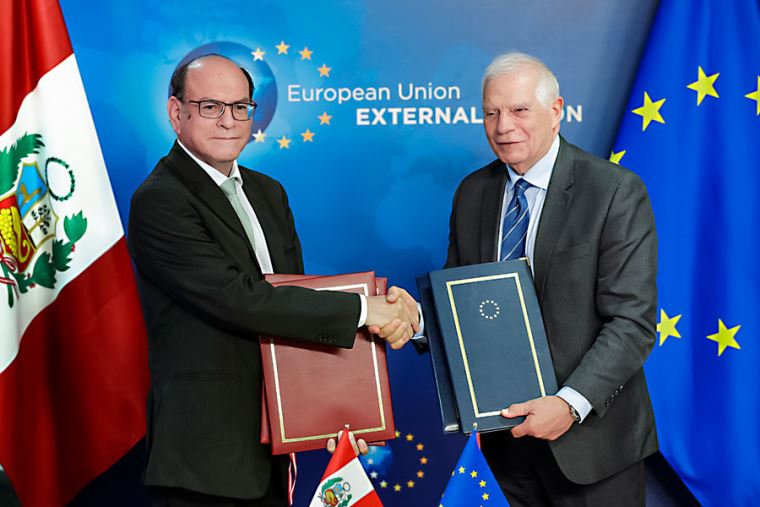
Trade relations between Peru and EU have become one of the strongest and most strategic alliances for the South American country. Since the Free Trade Agreement came into force in March 2013, the EU has become Peru’s third largest trading partner, accounting for approximately 11% of the country’s total trade in goods.
Just 10 years after the agreement was signed, data from the National Superintendency of Customs and Tax Administration (SUNAT) reveal that Peruvian exports to the EU have already reached US$6.811 billion, representing a 1.5% increase over the previous year and a sustained 6.2% increase compared to 2013.
For Peru, maintaining good relations with the European Union is a step forward that can help strengthen its position in the region. With the recent inauguration of the Port of Chancay, which will cut down on travel time to Asia—mainly China—the Inca country has exports as one of its main sources of income, with a special focus on Europe, an area that, according to PROMPERÚ, represents a potential market of more than 500 million people.
That is why in this article we will take a look at the benefits that trade relations between Peru and EU have already reaped and what they may mean in the future.
From Peru to Europe: the most exported and the most exportable
The European Union is one of Peru’s main trading partners. Thanks to the current FTA, Peru already enjoys preferential access to this market. Among the main goods exported to the European market are copper (11.4%), unroasted coffee (9%), fresh avocados (7%), zinc calcine (6.1%), and blueberries (5.5%). Likewise, in the more than 10 years of the trade agreement with the European Union, products totaling US$ 43.717 billion have been imported.
To date, the EU ranks as Peru’s leading supplier of pharmaceutical products, and the Inca country is the leading non-EU supplier of avocados, blueberries, and asparagus, and the second largest supplier of fresh grapes to the EU.
However, this agreement could also mean a significant expansion in the types of products with export potential. Gold could rebound to approach copper and zinc exports. Similarly, so-called “Peruvian superfoods” such as quinoa and organic coffee could capitalize on their current popularity in Europe to take advantage of the health trend.
Other products with the potential to increase their export levels include those related to fishing (fishmeal, shrimp, and canned tuna), agro-industrial products such as cocoa, textiles such as Pima cotton and alpaca garments, among other primary or final products.
Finally, another aspect that is being sought to increase is the destination countries for Peruvian exports in Europe. According to information from ADEX, between January and October 2024, the Netherlands has been the most significant country for Peruvian exports, reaching a total of US$ 1.958 billion, followed by Spain (US$ 1.652 billion), Germany (US$ 714 million), Italy (US$ 712 million), and Belgium (US$ 513 million).
The return journey: what the EU brings to Peru
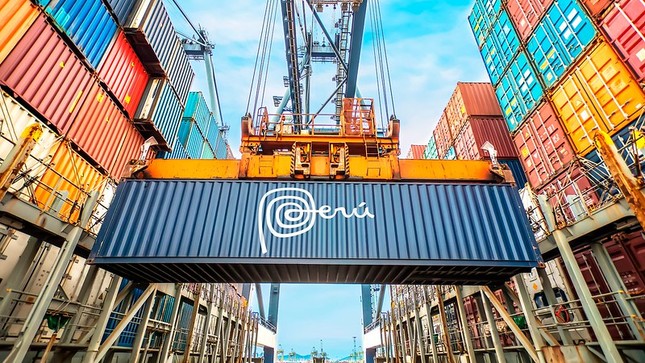
The European Union also plays a key role in the Peruvian market through its exports. Among the most notable products arriving in Peru are machinery, vehicles, pharmaceuticals, and processed foods. These goods represent a combination of essential inputs for Peruvian industry and final products for direct consumption.
According to data from the Peruvian Government, since the Trade Agreement came into force, Peruvian imports from the European Union have totaled US$43.717 billion. To date, it ranks as Peru’s leading supplier of pharmaceutical products and one of the most important suppliers of steel, plastics, and vehicles.
What are the expectations for the future?
For Peru, the FTA remains in force with very encouraging figures, and neither party has any intention of renegotiating terms that could affect it, so the outlook is promising. To this we can add the recent agreement between the European Union and Mercosur, a bloc that, although it does not include Peru, does have it as an associate state, so the outlook could improve.
One of the main opportunities is the diversification of exports towards higher value-added products, which would reduce its dependence on raw materials. This is an important pillar that in turn brings greater benefits.
With diversification of exports, the country’s image improves, attracting more investment from Europe. The sectors that can most benefit from this influx of investment are energy, infrastructure, and technology, which are considered strategic for driving economic growth and job creation.
By working with European companies, Peru could also incorporate advanced and sustainable technologies, improving the competitiveness of its products in international markets. SMEs will also be boosted by being able to access new markets and establish alliances with European partners. For example, over the last 10 years, Peru has registered 4,805 new companies exporting to the EU, 88% of which are micro and small enterprises.
However, to fully reap the benefits of the agreement, Peru needs to overcome certain challenges. These include improving its logistics infrastructure, reducing bureaucracy in export processes, and strengthening technical and technological education to prepare its workforce for the demands of the global market.
Knowledge of the local context is a key differentiator
For EU companies entering the local market, a public relations agency in Peru can be the key to success, as it facilitates access to key media outlets and opinion leaders, increasing visibility and credibility without relying exclusively on paid advertising.
Good trade relations between Peru and the EU represent a great opportunity for Peru to strengthen its position in international trade. With the commitment of the public and private sectors and an appropriate strategy, the country could not only increase its exports but also boost its long-term economic and social development.