
[vc_row][vc_column][vc_column_text]
Latin America is a global breadbasket, home to major food producers such as Argentina, Brazil, and Colombia, which rank among the world’s top exporters. The region also boasts vast natural ecosystems that play a vital role in preserving biodiversity in a world facing a climate crisis. In this context, sustainable agriculture stands out as a crucial alternative.
For agricultural practices to be deemed sustainable, several key factors must be met. While economic viability and productivity to meet demand are essential, these objectives must be pursued in balance with environmental responsibility and social equity.
In a continent marked by contrasts, where the traditional practices of indigenous peoples intersect with large-scale farming, a number of challenges arise in prioritising the environment for a successful transition. While this journey may be difficult, it is essential and could also present significant economic and social opportunities for the countries in the region.
Historical challenges in Latin America
The history of Latin America is deeply intertwined with its colonisation. For centuries, the region was predominantly under the control of Spain and Portugal, structured to supply resources to the metropolises. Even after independence, this framework remained firmly embedded in the way local societies developed.
To this day, many economies in the region remain heavily dependent on the export of commodities, often produced through monocultures that occupy vast areas of land. Examples include soybeans in Argentina and Brazil, and coffee produced on a large scale in Brazil and Colombia.
These monocultures frequently degrade the soil, as the lack of crop diversity exhausts the land. Additionally, the expansion of agricultural frontiers, driven by the push to increase production, is directly linked to the deforestation of crucial ecosystems such as the Amazon rainforest and Brazil’s cerrado.
Moreover, the high water demand of these crops exacerbates drought conditions, putting both wildlife and human populations at risk of water insecurity.
Social issues also play a pivotal role in this discussion. Due to its colonial legacy, many countries in the region continue to face significant land inequality, with large estates controlling most of the productive land while small producers struggle to gain access. This creates a situation where, for instance, rural areas experience poor working conditions and agrarian conflicts.
Innovative practices
Despite these challenges, Latin America is a continent of contrasts. While significant problems exist, it is also a vibrant laboratory of solutions and ideas to address these challenges by combining creativity, knowledge, and technology. Here are some examples that are shaping the future of sustainable agriculture.
Integrated systems
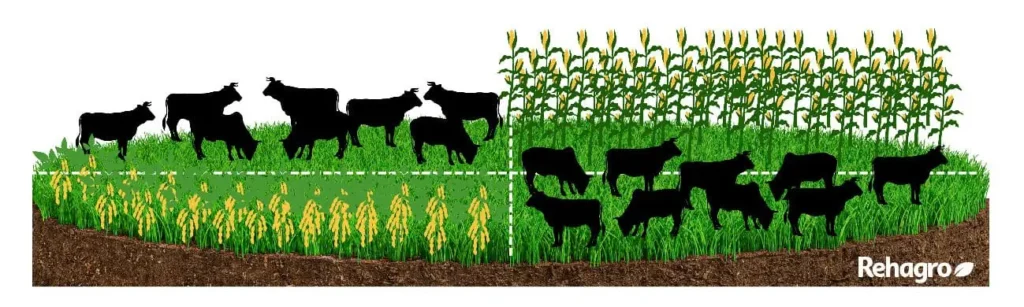
One approach gaining popularity in the quest for more sustainable production is the creation of systems that integrate various crops. Well-known cases include crop rotation to replenish soil nutrients and raising animals alongside fruit trees for better land use.
These practices can also have unexpected benefits. In the example of cattle raised alongside orchards, animal waste can naturally serve as fertiliser, and the shade from the trees provides shelter from the sun, reducing stress and increasing livestock productivity.
These practices not only provide environmental solutions, such as better land use and reducing pressure on ecosystems, but also diversify the producer’s income, offering both social and environmental solutions. In Brazil, the ILFP model (Integrated Crop-Livestock-Forestry) is gaining traction, especially in tropical zones.
Precision agriculture
Technology can also be a great ally in the search for more sustainable production. The use of high-precision GPS, for example, can provide valuable information about soil, climate, and crop health.
This allows producers to apply inputs (such as water and fertilisers) in a targeted and precise manner, using only the necessary amount. The result is increased productivity on the land, reducing the need for expansion onto new lands and reducing resource waste.
Another aspect where sensor mapping can be used is in pest identification, guiding tractors to avoid the over-application of inputs, thereby protecting the soil.
Agroforestry
Looking towards the future is key to developing solutions, but much of the knowledge of the past is also essential. This is particularly true when considering the practices and wisdom of local populations, often sidelined during centuries of colonisation in Latin America.
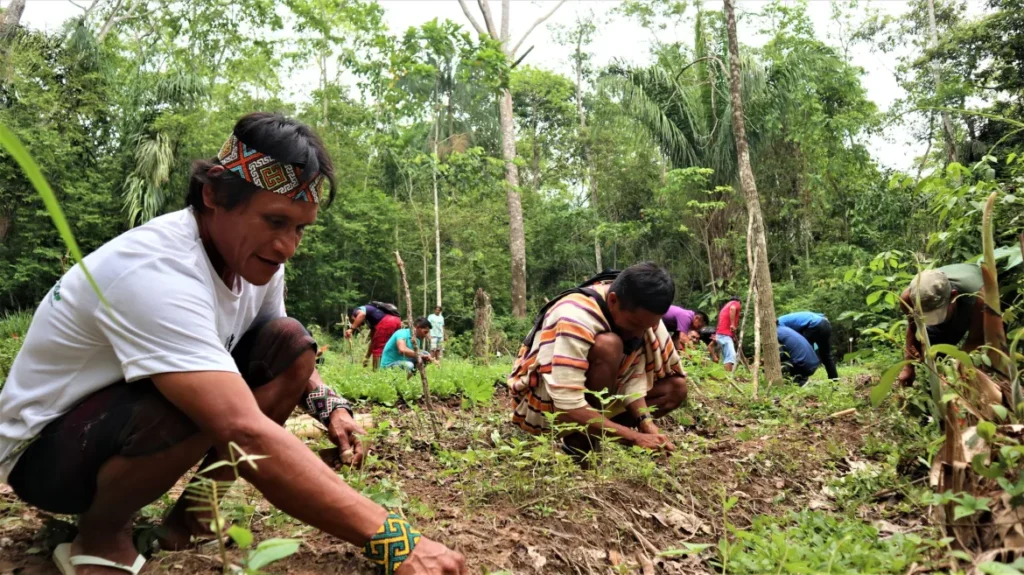
One of the main techniques for sustainable agriculture comes from indigenous peoples: agroforestry. This form of production combines various native and exotic plants with animals, creating a balanced ecosystem that provides products while maintaining ecological balance.
The advantages of this approach include greater profitability, improved water infiltration, control of soil erosion, and the natural maintenance of local biodiversity.
These techniques, which have been used for centuries by indigenous peoples throughout Latin America to produce foods such as nuts and tubers in an environmentally friendly manner, can be adapted to produce exotic species with greater balance, such as coffee, which can be integrated into biological corridors, as seen in parts of Colombia.
Small producers and traditional communities
Large producers dominate exports in Latin America, but it is in family farming that we find valuable lessons in sustainability, food security, and biodiversity protection.
A significant portion of local production in many Latin American countries comes from family farming. This makes them essential to ensuring food availability for a large segment of the population, and thus, they are foundational to food sovereignty.
Since the production techniques of these farmers are passed down from generation to generation, and due to both tradition and necessity, there is a deep concern for soil health and maintaining productive land, making their farming inherently sustainable. However, these groups face challenges in maintaining their practices. The most significant obstacles include difficulty in accessing land, as large estates occupy most of the productive land in Latin America.
Other challenges in empowering this type of production lie in limited access to rural credit and formal market opportunities, preventing many from competing with larger agricultural estates. Some solutions include land reform policies, investment in strengthening niche markets for agroecological products, such as organics, and local marketing circuits that shorten the distance between producer and consumer, alongside the development of collective organisations such as cooperatives and associations.
Between legacy and innovation
The agricultural landscape in Latin America is characterised by a deep duality: on one side, the historical legacy of the extractivist model, and on the other, an ecosystem of innovation and tradition striving for more eco-friendly production methods aligned with environmental needs.
Overcoming these challenges, however, requires investment and the recognition of the wisdom of small farmers, as well as the incorporation of some of their practices by larger producers. If pursued with care and responsibility, this path can yield important results, ensuring the protection of biodiversity while contributing to the fight against climate change.
[/vc_column_text][vc_btn title=”Check out CSR front” style=”custom” custom_background=”#1BB49C” custom_text=”#FFFFFF” size=”lg” css_animation=”fadeInDown” css=”” link=”url:https%3A%2F%2Fwww.sherlockcomms.com%2Fcorporate-social-responsibility%2F|target:_blank”][/vc_column][/vc_row]