
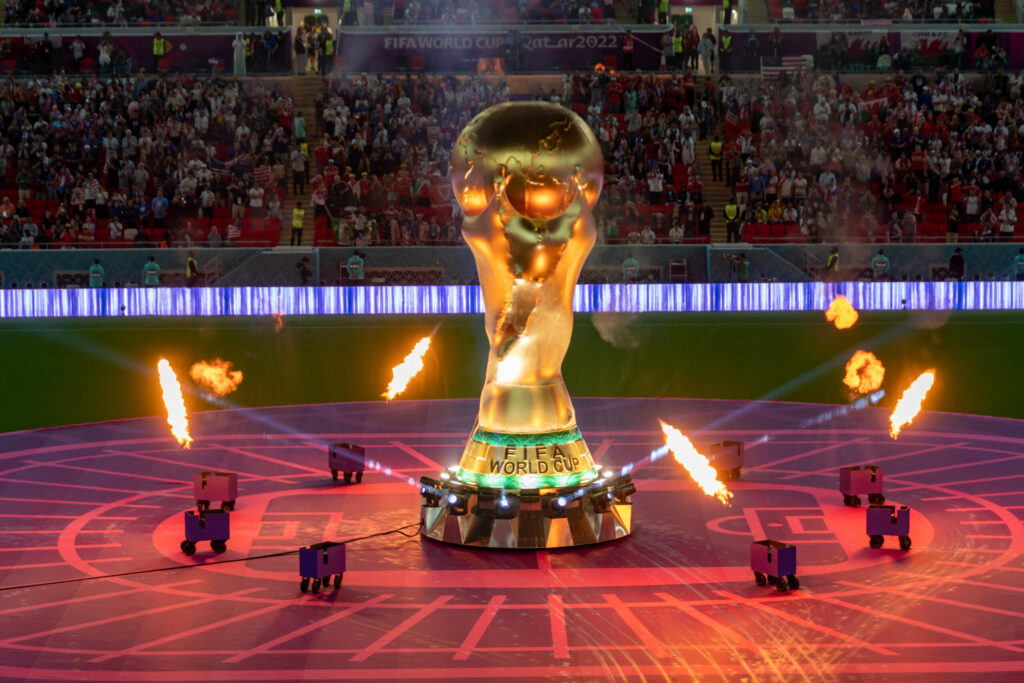
Brand activations around the 2026 World Cup are already shaping the market long before kickoff. In an increasingly competitive environment, capturing audience attention now requires far more than traditional visibility. Brands need experiences that connect, engage, and spark conversation.
The 2026 edition is set to be one of the biggest in history, with three host countries and a global audience that is even more fragmented and digital. For brands, this creates a real opportunity to position themselves within a culturally significant moment. It also demands strategy, market awareness, and precise execution.
Within World Cup marketing in Latin America, the challenge is understanding local behavior without losing regional scale. Simply showing up is not enough. Brands need to be relevant at the right time, in the right channel, and with the right approach.
Examples of 2026 World Cup brand activations
Globo
Globo confirmed the participation of 22 brands in its 2026 World Cup coverage. Major sponsors include companies such as Ambev, Itaú, Unilever, and Caoa, alongside other brands participating through different commercial formats.
Coverage will include 52 matches supported by an integrated operation across free-to-air TV, pay TV, streaming, and digital platforms. The strategy centers on continuous content distribution before, during, and after each match.
As part of this approach, Globo developed a project with Play9 that brings together content creators to produce real-time content. The goal is to tap into tournament conversations and trends while extending brand visibility beyond traditional broadcasts.
Motorola
Motorola launched a limited-edition smartphone in Brazil tied to the 2026 World Cup. The device features soccer-inspired design elements, including finishes influenced by match balls and custom details connected to the tournament.
The launch is part of a broader strategy combining tailored campaigns, digital presence, and consumer experience initiatives.
Coca-Cola
Coca-Cola continues its presence at the tournament through music and culture-driven initiatives. For 2026, the brand introduced a music campaign built around a new version of “Jump,” featuring international artists.
The campaign was developed with record labels and distributed globally, connecting the brand to the broader cultural energy surrounding the competition.
Hyundai
Hyundai launched “The Greatest Cheer,” a global contest aimed at children ages 5 to 12. The campaign invites participants to create drawings that will be submitted to FIFA.
Selected designs will appear on the buses of participating national teams. Winners will also receive prizes such as match tickets, flights, and accommodations.
Mastercard
Mastercard developed a campaign with Lionel Messi built around the concept of jersey swaps. The initiative resulted in a limited-edition collection created in partnership with a creative director.
The ten pieces represent iconic moments from Messi’s career and connect the brand to the emotional storytelling of soccer.
LEGO
LEGO announced a special collection for the 2026 World Cup. The line includes minifigures of players such as Lionel Messi, Cristiano Ronaldo, Vini Jr., and Kylian Mbappé.
Alongside the individual figures, the brand introduced a buildable version of the tournament’s official trophy as part of its commercial strategy for the event.
Advice for Marketing Professionals in Latin America: What Your Brand Should Avoid
Using Official Names and Terms
Using phrases directly associated with the tournament can create legal risks, especially in commercial contexts. Even creative variations may be interpreted as unauthorized associations.
Using Official Visual Assets
Logos, the trophy, tournament branding, and related graphic elements should not be used, including adapted or inspired versions.
Suggesting a Relationship with the Tournament
Any communication implying sponsorship, partnership, or an official connection to the World Cup should be avoided unless the brand is an official sponsor.
Using References in Paid Campaigns
Ads, sponsored posts, and commercial creatives should not use direct or indirect references to the tournament without authorization.
Launching Tournament-Linked Promotions
Sweepstakes, experiences, or benefits tied to tickets or tournament-related perks often require official permissions.
How to Build Relevant Activations
Work with the Context, Not the Event
Soccer, passion, rivalry, celebration, and community remain open and powerful territories for brands. Tapping into those themes allows brands to connect without legal exposure.
Integrate Channels and Formats
Event sponsorship in 2026 should be part of a broader strategy that combines digital, social media, influencers, and physical or hybrid experiences.
Prioritize Experience and Participation
Audiences want to interact, create, and share. Activations that place people at the center tend to generate stronger engagement and organic reach.
Read the Moment in Real Time
The World Cup is dynamic, and conversations shift quickly. Brands that can respond to the moment with agility have a stronger chance of standing out.
A Unique Opportunity for Brands in LATAM
Brand activations around the 2026 World Cup represent one of the biggest communications opportunities of the coming years. In a crowded environment, the difference will come from creating experiences that feel relevant to audiences and naturally fit into conversations already happening.
For marketing professionals in Latin America, visibility will not depend only on being present. It will depend on knowing how to participate with cultural intelligence, creativity, and timing.