
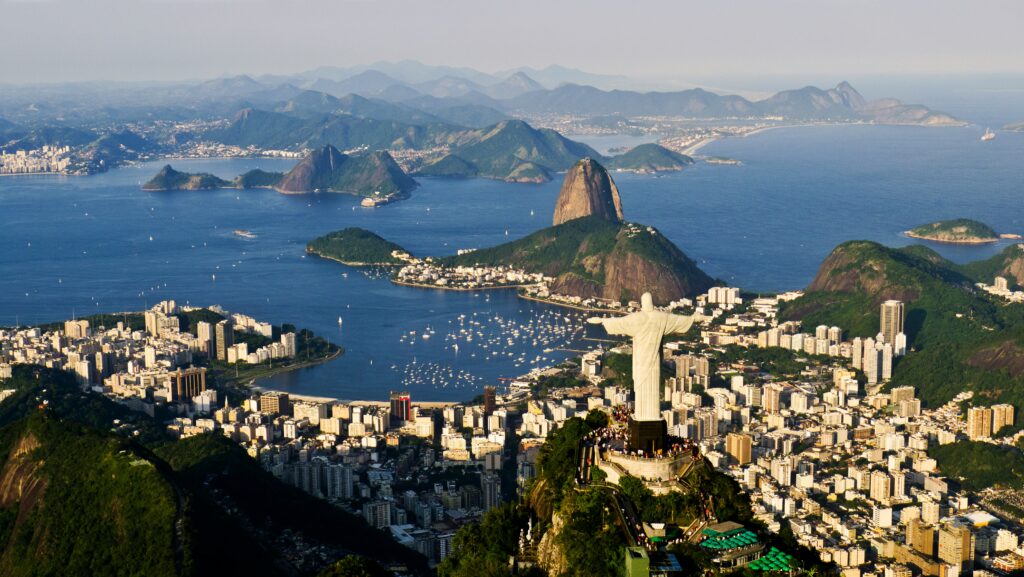
The transport and logistics sector in Brazil has been going through a profound change. Currently, about 65% of all cargo moved in the country depends on diesel vehicles. This dependency brings real problems for business operations, such as high fuel costs, traffic congestion, and pollution. In Rio de Janeiro, for example, road transport accounts for over 35% of polluting gas emissions.
Against this backdrop, the Laneshift project arrived in Rio de Janeiro to accelerate the electrification of freight fleets. This is a global initiative created by the C40 Cities network and The Climate Pledge. The goal was to make electric mobility a tangible reality by expanding public charging infrastructure and creating a trustworthy environment for companies to start transitioning their fleets. However, making a technological shift of this scale in a city like Rio required a strategic communication plan that could provide confidence and information to both businesses and the public.
The challenge
The project faced hurdles from the very beginning. Many fleet owners had doubts about maintenance costs and whether electric vehicles could handle heavy duty work. There was also a risk that electrification would be seen as an elitist solution, disconnected from the daily reality of Brazilian drivers. On top of this, the launch schedule coincided with major global events, which threatened to overshadow the importance of local infrastructure in favour of international diplomatic narratives.
Furthermore, just two days before the launch, Rio de Janeiro was hit by a severe public security crisis that brought the city to a standstill. This led to the cancellation of the Mayor’s schedule and residents being advised to stay at home. The timing also clashed with Prince William’s official visit to Brazil, which risked drawing media attention away from the local initiative towards the British royalty. Therefore, going ahead with the original event could have seemed insensitive, while stopping without a clear strategy would have put months of planning and the project’s own credibility at risk.
Changing course
At this point, we at Sherlock Communications decided to change the way we told this story. We introduced a more human and accessible narrative amidst so much technical data.
Campaign pillars
The strategy was divided into three main areas:
- A new narrative: We brought an approach that provided more value to brands and people by highlighting factors such as financial viability, public health gains, the revitalisation of the urban environment, and the promotion of dignity for transport professionals.
- Crisis management: We recommended a strategic delay for the launch, changing the campaign tone from celebration to solidarity. We redesigned the press materials to prioritise respect for the city’s situation while keeping media outlets engaged in an empathetic way.
- Institutional spokespeople: With the Mayor unable to attend due to the crisis, we organised alternative leadership, such as the Secretary of Economic Development, to ensure the announcement kept its authority and institutional weight with the public.
Through these pillars, we positioned Rio de Janeiro as a protagonist in a global ecosystem. We highlighted the city’s leadership in the lead up to COP30, which eventually led to the campaign becoming a finalist in the PR Week Global Awards 2026, one of the most important prizes in global communications.
Results
The strategy of being transparent and down to earth produced results far beyond expectations. Even with the delay and the crisis, the campaign secured 56 media stories, which was four times more than planned. Additionally, the project reached about 70 million people through Tier 1 outlets such as UOL and Agência Brasil. Most importantly, almost all the stories highlighted the core points of the initiative, showing that the message was understood.
The event held on 31 October brought together 70 strategic leaders from organisations such as Volkswagen Trucks and Buses, Heineken, and EzVOLT. This signalled strong commercial confidence in electrification. The impact was so positive that other cities, including São Paulo and Belo Horizonte, expressed interest in adopting similar models. By choosing to speak clearly and respect the local context, the strategy proved that innovation only moves forward when it makes sense for both society and the market.