
Sherlock Communications helps international organisations enter, grow, and thrive in Venezuela, one of Latin America’s most complex, rapidly realigning, and digital-first markets. From our regional office network, we combine local cultural insight, deep digital expertise, and trusted media relationships with the strategic and creative standards expected by global brands.
As an independent, award-winning agency, we help overseas clients bridge international ambitions with local realities. Whether navigating a heavily restricted regulatory environment, launching a new product, or building digital trust, our bilingual team ensures that your campaigns are culturally relevant, strategically sharp, and highly secure.
Venezuela is experiencing a remarkable economic turnaround after more than a decade of severe contraction. Following 19 consecutive quarters of moderate expansion, the country’s economy is showing signs of a breakout, with gross domestic product (GDP) growth projected at some 12% to 12.1%. According to the Central Bank of Venezuela (BCV), the second quarter of 2026 saw a GDP increase of 7.14% compared to the same period in 2025, marking 21 consecutive quarters of positive growth.
Much of this growth is driven by a recovery in the oil sector, which expanded by 9.10% in the second quarter of 2026, while the non-oil sector grew by 5.79%. This expansion is supported by rising oil production, which is currently pumping about 1.2 million barrels per day (bpd) and is projected to reach 1.35 million bpd by the end of 2026. Crude oil exports to the United States recovered significantly following the January capture of former dictator Nicolás Maduro, averaging 329,500 bpd under flexible licensing agreements with foreign joint-venture partners like Chevron, Repsol, Eni, and Maurel & Prom.
Further bolstering this outlook, the U.S. and Venezuela signed a landmark energy deal in late August 2026 aimed at unlocking development across 17 oil fields containing 65 billion barrels of reserves. Under the agreement, a joint initiative backed by private capital will channel up to $100 billion in potential investment into the sector.
However, despite these positive macroeconomic indicators, deep structural challenges remain. Annualized inflation continues to rank among the highest globally, hovering above 600%, though it is expected to close below 155%. Devaluation of the local currency (the bolívar) and low workers’ incomes creates a difficult scenario among citizens, whose everyday economic realities do not align with the positive GDP figures. Under Delcy Rodríguez government, the hydrocarbons law has been revised to allow greater operational autonomy and lower royalties from 33% to as low as 15% to attract foreign cash flow, while a pending mining law proposes to extend concessions and introduce international arbitration.
For global brands, this realigning market offers unique opportunities, but navigating the highly volatile exchange rate and complex legal landscape requires highly experienced local guidance.
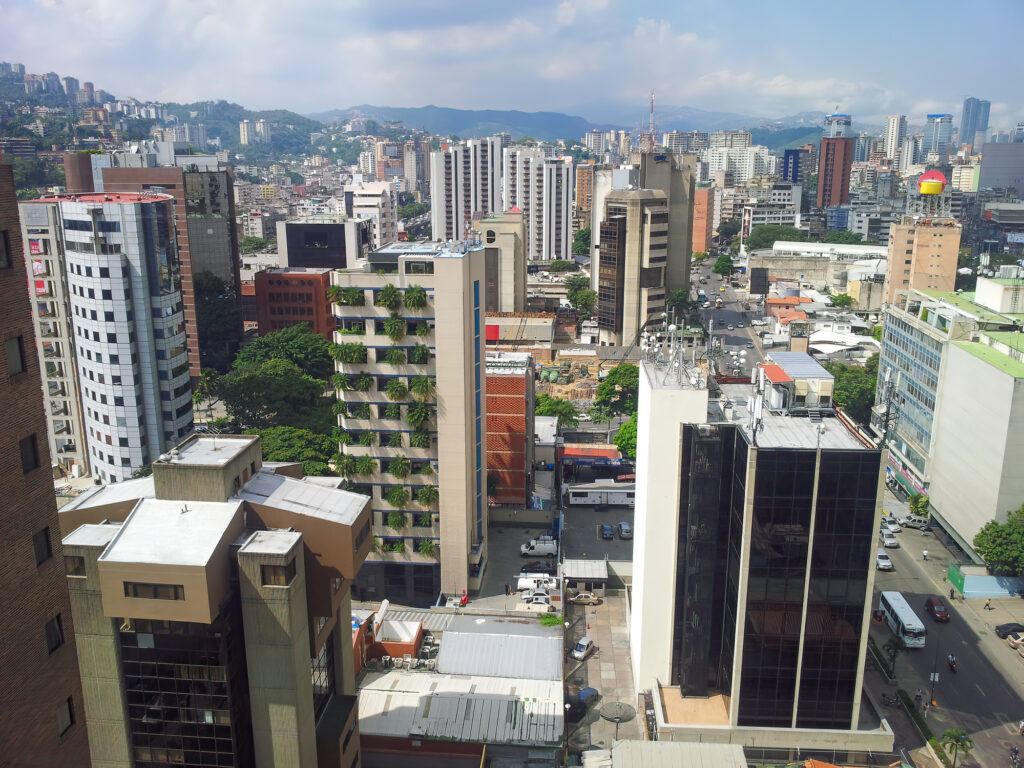
Venezuela’s demographic profile is unique in Latin America, defined by a dense urban population and a massive global diaspora. According to United Nations data, the country’s population stood at 28.5 million in late 2025, growing at an annual rate of 0.4%. An overwhelming 88.6% of Venezuelans live in urban centers, primarily concentrated in the northern coastal strip and major metropolitan hubs like the capital city, Caracas, and the secondary economic hub of Maracaibo.
The median age of the population is 29.4 years, with a highly active consumer base. Crucially, Venezuela’s consumer culture is heavily influenced by its massive diaspora of nearly 8 million citizens. The continuous flow of remittances from abroad serves as a major driver of local retail and private consumption. For example, the National Association of Supermarkets and Self-Service Stores (ANSA) reported a remarkable 21% growth in supermarket consumption between January and July 2026, accompanied by the opening of 26 new stores nationwide.
Brands seeking to capture the Venezuelan market must understand that consumer decisions are heavily networked, often involving consultations and financial support from family members living in Colombia, Peru, the United States, Spain, or Chile.
Faced with persistent local-currency devaluation, high inflation, and cash shortages, the Venezuelan financial system has evolved into a highly decentralised, hybrid model. Widespread, unofficial US dollarisation has been complemented by a massive surge in mobile peer-to-peer bank transfers and digital asset adoption.
The absolute cornerstone of daily local retail is Pago Móvil, an instant mobile-to-mobile bank transfer system used for almost all minor fiat transactions. Alongside Pago Móvil, Venezuela has become one of the most active cryptocurrency and stablecoin markets in Latin America, particularly for peer-to-peer (P2P) trading. Following a major restructuring of the national regulator SUNACRIP, the market has stabilised around licensed local options and global platforms.
For international brands operating in this landscape, compliance and payment execution require strict adherence to local banking security guidelines:
The digital media landscape in Venezuela has experienced notable positive changes in 2026 as restrictions on several news portals and social media outlets have been lifted. While lingering blocks and regulatory oversight still affect part of the online space, these policy updates signal a constructive step toward greater openness, creating new room for dynamic communication strategies.
Venezuela’s information ecosystem has undergone a massive shift from print to digital, largely driven by state hegemony over broadcast television and legacy outlets affected by two decades of political and economic turmoil. Consequently, social media platforms and independent digital outlets have emerged as vital for journalism.
Key features of this landscape include:
Despite these extreme barriers, digital connectivity in Venezuela is surprisingly resilient and growing:
TikTok leads digital reach in Venezuela among adult audiences, capturing 16.6 million users aged 18 and older, representing an astounding 83.8% of the adult population. Facebook remains a broad powerhouse with 15.6 million users, supported by Messenger’s 5.45 million reach, while Instagram commands a substantial visual footprint of 9.8 million users. Although its overall user count is smaller than Facebook’s, Instagram has established itself as one of the primary channels for the distribution of news of any kind and is a go-to source of daily information for ordinary citizens. It has high engagement among younger demographics, urban centers, and business/e-commerce sectors. Meta’s microblogging alternative, Threads, currently captures a smaller niche of 940,000 users.
WhatsApp functions as the absolute, undisputed center of daily communication and informal e-commerce. Driven by broader platform blocks, it has evolved into the primary ecosystem where Venezuelans conduct daily trade, share breaking news, and manage local businesses. Meanwhile, professional networking concentrates heavily on LinkedIn, which serves as a corporate hub for 6.4 million members and Twitter with more than 675K users is mainly focused to shape public discourse by politicians, journalists, and opinion leaders.
In a country defined by decades of socio-economic realignment, political friction, and strict digital monitoring, successful communication requires extreme cultural fluency and care.
Venezuelans are highly resilient, warm, and creative. To connect authentically with local audiences, international brands should embrace the following strategies:
Working with a local agency partner in Venezuela is a critical operational necessity for reputation management and risk mitigation.
At Sherlock Communications, our on-the-ground understanding of the Venezuelan ecosystem ensures your brand is protected: