
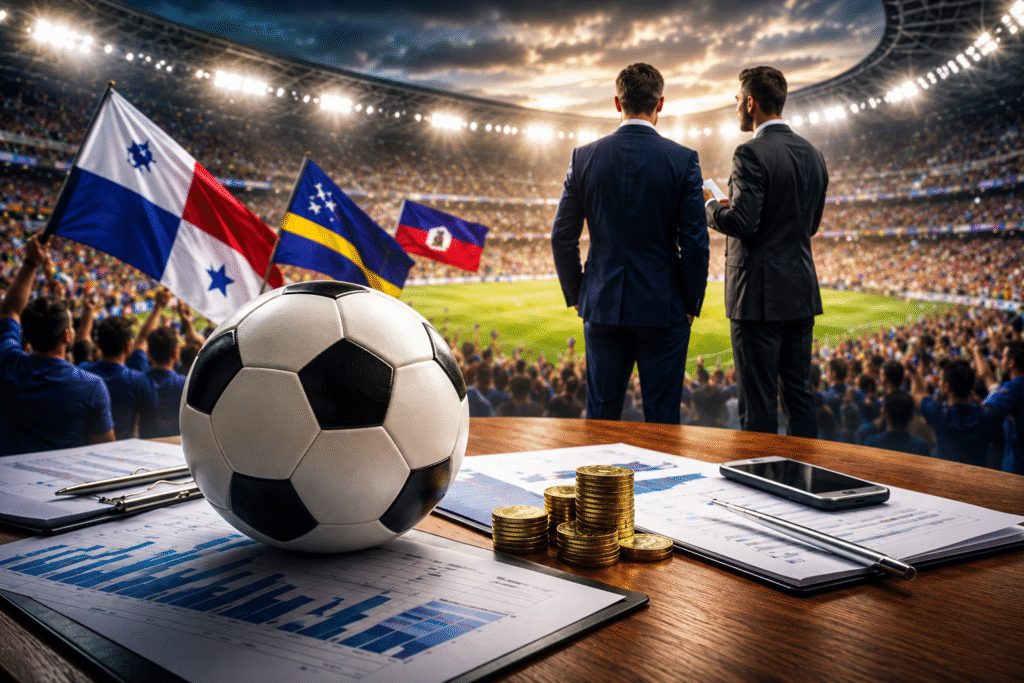
The FIFA World Cup 2026 features some of the most unlikely qualifiers in the tournament’s history. Their stories have less to do with luck than with a philosophy every strategist should recognize.
Few events concentrate global attention quite like the World Cup. Nations that rarely feature in global headlines suddenly find themselves sharing the spotlight with football’s traditional powers. For a few weeks, the world watches. But the more interesting question is what remains once the final whistle blows and the spotlight moves elsewhere.
For smaller nations, and for brands competing in crowded markets, the more meaningful achievement is often earning visibility, credibility, and a place in the conversation. Long before anyone reaches the podium, they must first prove they belong on the stage. This is where the real World Cup 2026 business lessons begin.
Panama: Why Deliberate Positioning Builds a Regional Hub
Panama understands this sequence better than most. Over the past decade, the country has emerged as one of Latin America’s most dynamic economies, strengthening its position as a regional hub for trade, logistics, finance, and connectivity. The Canal remains its most visible symbol, but Panama’s broader success has been built on a deliberate effort to position itself at the crossroads of goods, capital, and people moving across the hemisphere.
The football team has done the same: years of sustained investment in youth development, coaching depth, and competitive regional play have compounded into something real. More importantly, it earned its place by outperforming regional established CONCACAF nations, such as Costa Rica, a quarterfinalist in 2014 and one of the region’s traditional powers, and Honduras, another World Cup regular.
Curacao: The Smallest Nation With the Loudest Argument
Curacao’s qualification carries a different kind of weight. Home to fewer than 160,000 people, it becomes the smallest nation ever to reach a FIFA World Cup, challenging the notion that scale determines outcomes. In both sport and business, larger players tend to enjoy obvious advantages. Yet smaller contenders occasionally succeed by identifying opportunities that others overlook and executing with greater precision.
The island has long understood that smaller markets can compete when they play to their strengths. Its economy has been built around tourism, financial services, and the strategic advantages of its Caribbean location, an approach rooted in the recognition that competitive advantage rarely comes from matching a rival’s resources, but from knowing how to maximize your own.
Haiti: After 52 Years, Why Resilience Is a Competitive Advantage
Haiti’s return to the tournament, more than five decades after its last appearance, brings another lesson: resilience. Its qualification comes against a complex national backdrop, but that is precisely why the moment carries weight. For Haiti, the World Cup is an opportunity to widen the frame through which the country is seen.
Its diaspora, remittance economy, textile sector and cultural influence already form part of a broader economic story. Football now adds another layer, a reminder that visibility can reopen conversations, attract attention and create new forms of engagement.
What Emerging Markets Teach Global Brands About Timing and Presence
Panama, Curacao and Haiti may not be among the favourites to reach the latter stages of the competition, let alone lift the World Cup. Yet focusing just on who eventually lifts the trophy misses the broader story unfolding across Central America and the Caribbean. The real achievement is that they have earned a place on the same field as football’s traditional giants. They are competing in the same arena, attracting the same global attention, and benefiting from the same visibility opportunities.
For communications leaders, the 2026 World Cup offers a useful reminder. The most effective strategies are not the loudest. They are the ones that understand the field, respect the audience and know when to move.
In business, emerging markets often face a similar reality. They may not match the scale, capital, or influence of larger economies, but growing relevance, structural resilience, and deliberate positioning have a way of compounding quietly until they can no longer be dismissed.
For brands and organizations looking to build genuine presence in Panama and the Caribbean, reach the regional team at midamerica@sherlockcomms.com.