
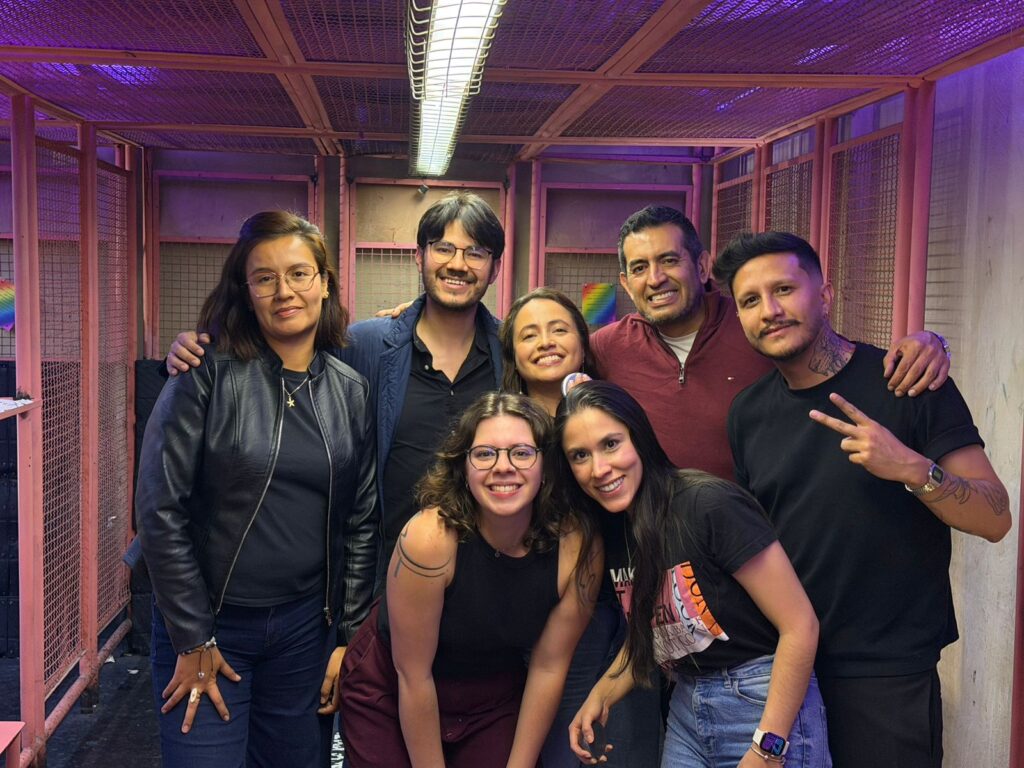
Who would have thought that four weeks could feel like a lifetime? As part of a professional exchange program between Sherlock Communications’ Latin American offices, I traveled directly from Brazil to spend a month working side by side with our team in Bogotá. From cultural immersion to professional growth, not a single day went by in Colombia without learning something new. Yet, what stayed with me most was the warmth and kindness of the Colombian people.
A kindness proudly expressed through their culture and history: from arepas to gold, granadilla to green and sweet plantains; from Medellín to Bogotá; from the historic city center to the headquarters of the country’s most influential media outlet, El Tiempo. Among all its riches, it was the people who charmed me the most.
The truth is that people are the cornerstone of communication in Colombia. Upon arriving in Bogotá, I came as a Public Relations professional, but above all, as a journalist and curious observer, adopting an almost anthropological perspective toward the experience awaiting me. I realized that the country is deeply divided by regions and social strata, in a way that differs significantly from Brazil. While regions are defined by distinct fronts like the Antioqueña, the coastal region, and the Colombian Caribbean, socioeconomic strata are part of an official system established by the government (via Law 142 of 1994) to classify residential properties on a scale from 1 to 6, based on location and the physical characteristics of the housing and neighborhood.
In practice, I saw how these regional and socioeconomic differences shape distinct cultural references, habits, and contexts that must be deeply considered in strategic communication. To plan a relevant PR campaign in Colombia, understanding these social markers and knowing how to connect with them is essential. Working alongside the local team allowed me to directly measure the impact of these nuances in day-to-day operations.
During my very first week — on my very first day of the exchange, in fact—the country recorded its largest earthquake in a decade. For days, the seismic shock became the central topic across every corner of the nation. Together with the local team, we recognized the importance of aligning our strategies with the country’s immediate reality, understanding that pushing stories completely disconnected from the emergency could come across as out of touch. After all, communication is only effective when it respects people’s lived reality.
Within this scenario, we identified an opportunity to focus on public utility and data-driven insights. Working closely with one of our clients in the financial services and investment sector, we developed a study on the economic impact of the disaster. Since financial markets react directly to instabilities of this magnitude, presenting the sector’s perspective to help the press and the public understand the post-crisis environment made complete sense.
The analysis revealed that beyond the human and infrastructural toll, there was a direct financial impact: the country’s fiscal deficit, already projected at around 7% of GDP for 2026, could increase significantly due to reconstruction costs, estimated between 20 and 40 trillion Colombian pesos (between 1% and 2.2% of GDP, according to estimates by BTG Pactual, the National Planning Department, and Asocapitales). With this well-founded, relevant, and timely approach, we successfully positioned the company in nearly every Tier 1 media outlet in Colombia.
This experience reinforced the strategic importance of working with experienced local teams who thoroughly understand their country’s political, social, and media landscape. At the same time, the exchange fostered a rich cross-pollination of methodologies between offices: while I absorbed the Colombian team’s deep contextual awareness and agility, I contributed Brazil’s expertise in structuring and backing narratives with market intelligence and data. This synergy between native knowledge and complementary PR methodologies is what transforms regional campaigns into high-impact strategies across Latin America.
Among the lifelong professional experiences we carry forward, this was undoubtedly one of the most memorable.